


Find us on
The real cost of waiting until someone is on the bench.

Youssef A. Mallouk
Market Research
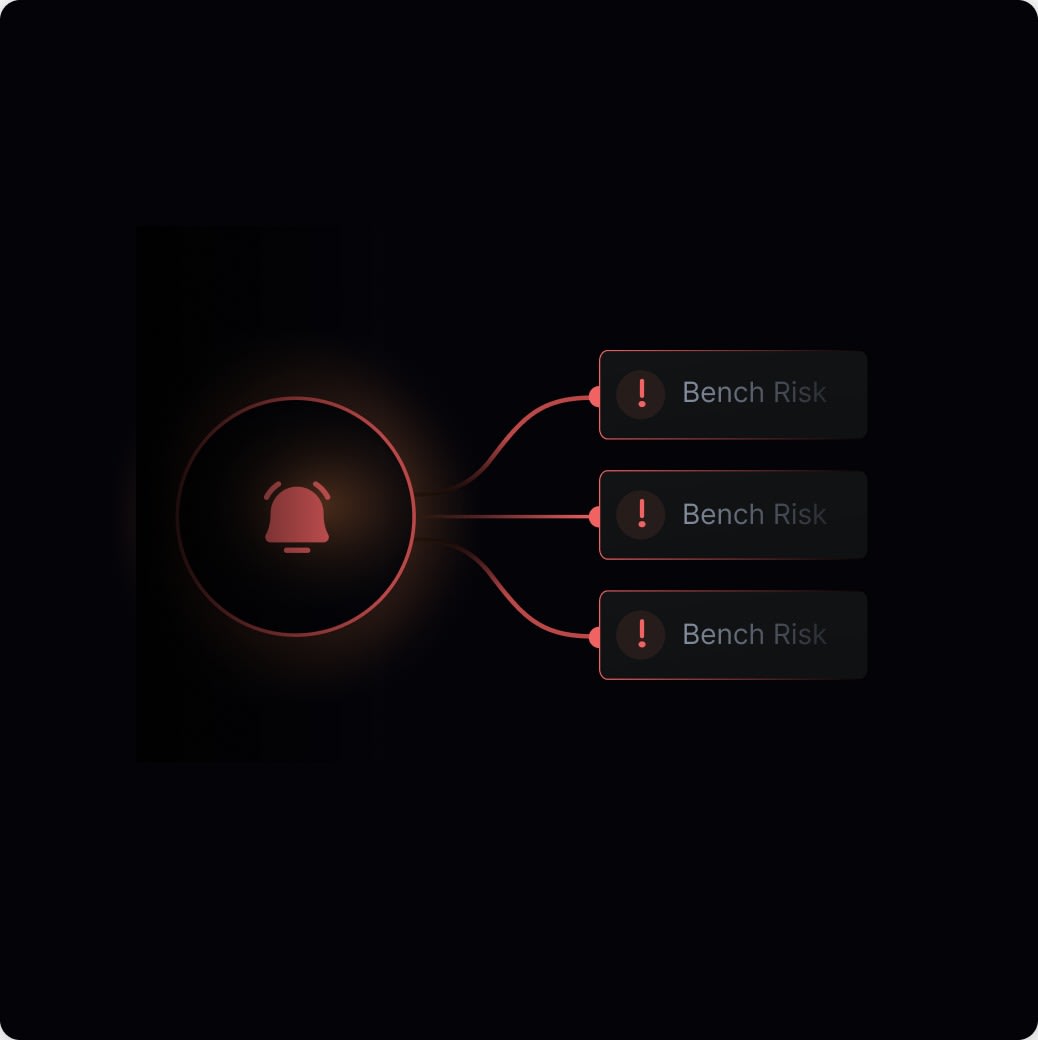
Bench time doesn't begin when an assignment ends. The decisions that lead to it often start much earlier.
Every secondment organization knows the moment.
An assignment is about to end. The client hasn't extended. And suddenly a skilled professional is available without a next opportunity lined up.
The team springs into action. Profiles are refreshed, CVs are sent out, account managers start calling clients. Everyone works hard to close the gap as quickly as possible.
But by then, the clock is already running.
Bench time is rarely a surprise.
In most cases, the end date of an assignment has been known for weeks or even months. It's written in a contract, mentioned in a planning sheet or remembered by the consultant who manages the relationship.
The information exists. It just isn't visible to the people who need to act on it, at the moment they need to act.
When end dates live in spreadsheets and availability is tracked in someone's inbox, the first real signal often arrives when the professional is already waiting for their next role.
A risk you can't see is a risk you can't manage.
The cost adds up quietly.
Every day on the bench is a day without revenue. But the financial impact is only part of the story.
Professionals who wait too long between assignments start to wonder whether their employer is really looking out for them. Some begin exploring other options. Recruiters feel pressure to place quickly rather than place well. And clients notice when the best match isn't presented, simply because the timing didn't work out.
None of these costs show up in a single report. Together, they shape how an organization grows.
From reacting to anticipating.
The teams that manage bench time best don't necessarily work harder at the end of an assignment. They start earlier.
They know which assignments are ending in the coming months. They see which professionals have no confirmed follow-up yet. And they connect that information to upcoming client demand, long before anyone is actually waiting.
Instead of asking, "Who is available right now?" They can start asking, "Who will be available soon, and where should they go next?"
That shift turns a scramble into a plan.
Early signals create better options.
When bench risk becomes visible weeks in advance, the conversation changes. Account managers can approach clients about extensions in time. Recruiters can match professionals to new requests before the current assignment ends. Professionals can discuss what they'd like to do next, instead of accepting whatever is available.
It's not about predicting the future perfectly. It's about giving your team enough time to make good decisions.
The best time to prevent bench time is before it starts.
You just need to see it coming.